Bae Liles needed a store that matched the collection
Bae Liles paid for a fancy site and got a WordPress theme with a basic store. How we rebuilt Shopify around identity, City Jewell photography, checkout, and a list that grew 300+.
On this page
Bae Liles had already paid for a website.
A fancy design company built it. What she got was a simple WordPress theme with a basic store bolted on. The collection was global sustainable fashion, all-woman-made, with pieces designed to style more ways than one dress should reasonably allow. The site did not live at that level.
Bae Liles needed a store that sold like the clothes looked. Shopify store branding had to catch up to the product.
The brand was ahead of the store
Bae Liles is built around sustainable fashion you can actually wear hard. One dress, many ways to style it. The bags were a number one product, made by women in Africa, meant to travel with the person carrying them, not sit as a one-look product shot. Dresses and bags both had to feel intentional on the page.
That story was already true in the product. It was not true on the old site. A WordPress skin with a store attachment cannot carry upscale global fashion, no matter what the invoice said. Shoppers felt the gap between the garment and the page.
Our partner at the time, City Jewell, was already running serious photography with shooters across the country to craft the look Bae Liles was aiming for. The store had to catch up to that work, not sit beside it as a separate cheap layer.
What we rebuilt on Shopify
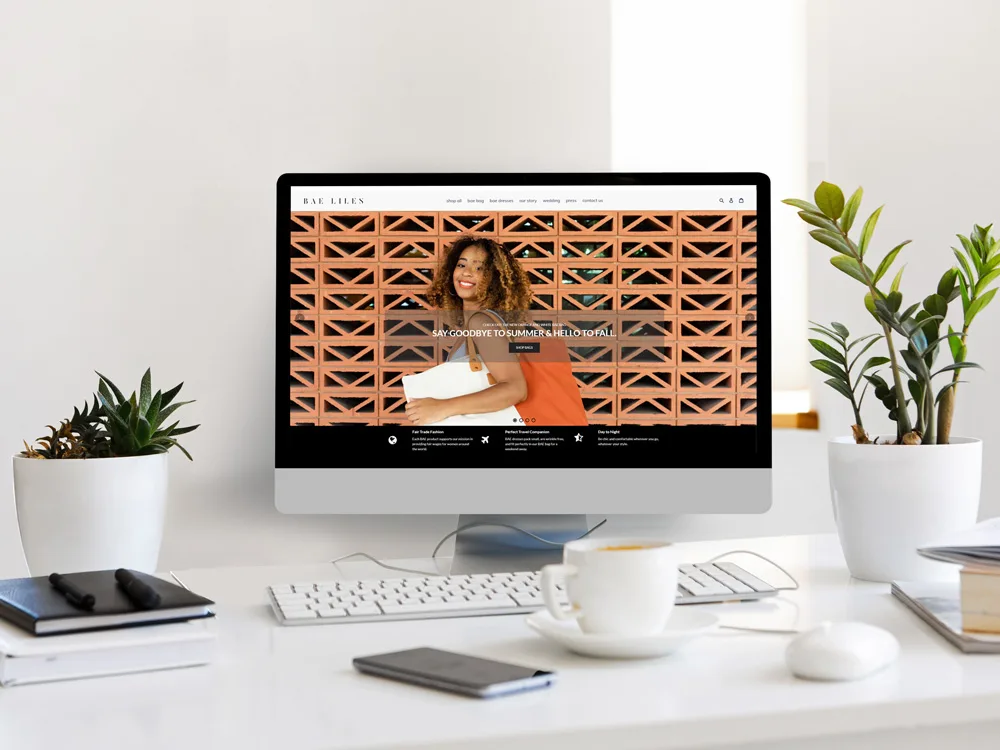
We moved Bae Liles onto a custom Shopify build as certified Shopify experts, and we treated the storefront as part of the brand system.
That meant more than swapping a theme. We rebuilt the fashion Shopify store so identity, product story, and buy path moved together. Checkout got cleaned up so the path to purchase did not dump people into a generic cart experience. Lead capture went into the flow so interest did not vanish after a browse. Abandoned cart emails pulled people back when they left something behind.
With City Jewell, the photography and film from those shoots became the language of the store. The PDPs and campaign moments had to feel like the same brand as the bags and dresses in hand. That is Shopify brand design as an ecommerce brand website, not as a template pick.
The contest that grew the list
A store only works if people keep showing up. Bae Liles also needed a list she could talk to.
We ran a contest through Instantly.ai around a prize pack weekend at one of the homes they use for events. Strangers entered. She grew the email list by more than 300 new contacts from that push alone. The winner became another photoshoot opportunity for social and follow-on creative, so the campaign fed the brand instead of ending at a giveaway.
That is what an optimized Shopify experience is for: the shop sells, the list grows, and the creative keeps compounding.
Sustainable fashion needs a system that holds
Global sustainable fashion is easy to claim and hard to show. Bae Liles had the product truth. The multi-way dresses, the bags made by women in Africa, the all-woman-made line. Sustainable fashion ecommerce only works when the system around it stops undercutting that.
When the store, the photography, the checkout, and the list all speak the same language, the brand stops resetting at every click. Betsy’s line still holds: the brand feels like them. Sustainable, intentional, and genuinely beautiful. The digital side finally matches.
If you are building a fashion brand where the site still looks cheaper than the product, start with the system. Browse Shopify ecommerce, solutions, and apparel branding. When you are ready, start a project.
Let's build yours.
Tell us what you are working on. A real person reads every message.